
EPCs are becoming a much bigger deal - here’s why
Estimated Reading Time
Author

Fourlabs Copywriting Team
Date
22.04.2026
Updated 29.07.2026
The Government has since confirmed that private rented homes in England must meet EPC C or equivalent by 1 October 2030, unless a valid exemption applies.
For a long time, EPCs have been fairly low-key.
They’ve sat in the background as a requirement – something you sort out when a property is ready to go to market. Necessary, but not especially influential.
That’s now starting to shift and as 2030 gets closer, EPC ratings are playing a much bigger role in how properties are assessed, positioned and, ultimately, whether they stack up.
A quick recap on the UK EPC landscape
An Energy Performance Certificate (EPC) measures how energy efficient a property is, using a scale from A to G.
If you’re selling or letting in the UK, you need one. That hasn’t changed. What has changed is the weight that rating now carries.
It’s no longer just about compliance
EPCs are moving beyond being a simple box-ticking exercise.
They’re starting to shape real decisions – from investment and development through to letting and sales.
A big driver behind that is regulation.
- privately rented homes are expected to hit a minimum EPC rating of C by 2030
- that’s up from the current minimum of E
- in the commercial sector, the direction is similar, with higher targets like B being discussed
The takeaway is pretty simple – expectations are increasing, and lower-rated properties are under more pressure.
Why the shift now
A few things are all happening at once:
- energy costs are still a major concern
- sustainability targets are tightening across the board
- older buildings need more work to stay competitive
- occupiers are paying closer attention to efficiency and running costs
Because of that, EPC ratings are becoming a clearer indicator of how a property will perform – not just whether it’s compliant.
What this means on the ground
For anyone working with property, EPCs are becoming harder to treat as an afterthought.
- lower ratings may limit how and when a property can be let
- retrofit and upgrade strategies are moving up the priority list
- energy performance is starting to influence how assets are presented and perceived
Rather than dealing with EPCs at the end of a project, there’s more value in understanding likely outcomes much earlier – and adjusting accordingly.
Where Fourlabs fits in
This is where things move from theory into detail.
An EPC rating doesn’t just appear – it’s built from a set of calculations based on how a building is designed and specified. These calculations will be carried out by your Domestic Energy Assessor or DEA (often the same person who carries out your photos and floor plans too).
The creation of energy performance certificates is becoming increasingly complex and time consuming, especially for larger properties with multiple extensions and unusual shaped rooms.
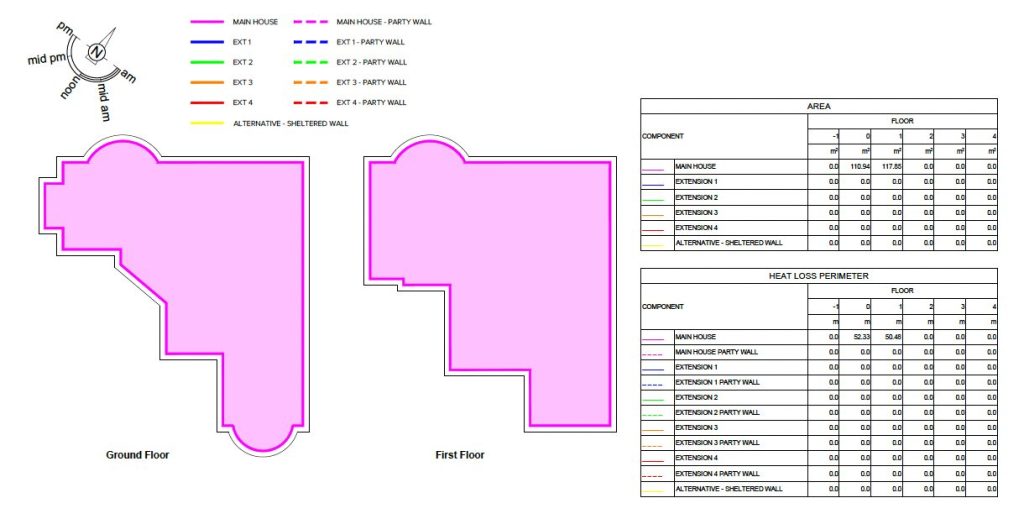
Our EPC calculation service is designed to save time and make your calculations more accurate as they are produced using CAD. Simply upload your sketch to our system in the format shown in the guide and we will prepare the calculations. We provide all the dimensions you require, including areas, heat loss perimeters and party walls which are split into extensions. The calculations are returned to you for submission into your EPC software.
For further details and advice send us an
or contact us on
0203 301 7216
Read More
Already have a Matterport scan? What else can you do with it?
Matterport’s own schematic floor plans provide a quick visual representation of a property’s layout. They are useful for giving an overview of the space, but they aren’t necessarily the finished plan a property professional needs. Fourlabs can take the information
Why consistent branding matters more than ever in property marketing
As more marketing activities are outsourced, businesses often find themselves working with different suppliers for photography, floor plans, videography, virtual tours, social content and design. While each supplier may produce excellent work individually, the end result can sometimes feel disconnected…
